
ABOUT
Why make this documentary?
(the intention of our film)
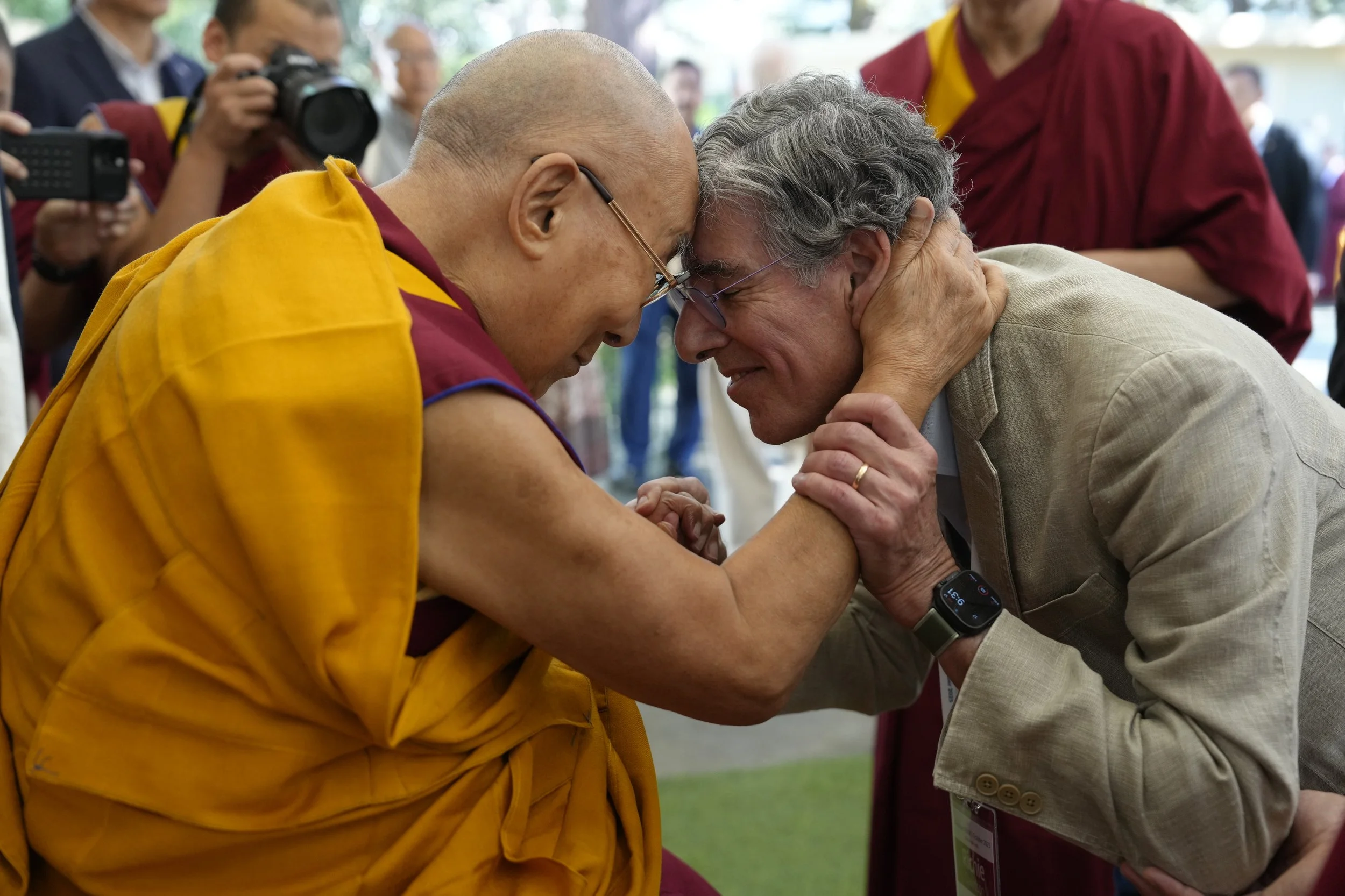
For nearly four decades, the 14th Dalai Lama has remained committed to his vision of a meaningful dialogue between ancient Tibetan Buddhist wisdom and modern Western science. What began in 1987 as the first Mind & Life Dialogue has evolved into a living laboratory where two great traditions meet to investigate the mind, reality, and the possibility of human flourishing — advancing what the Dalai Lama describes as “the 100-Year Project.
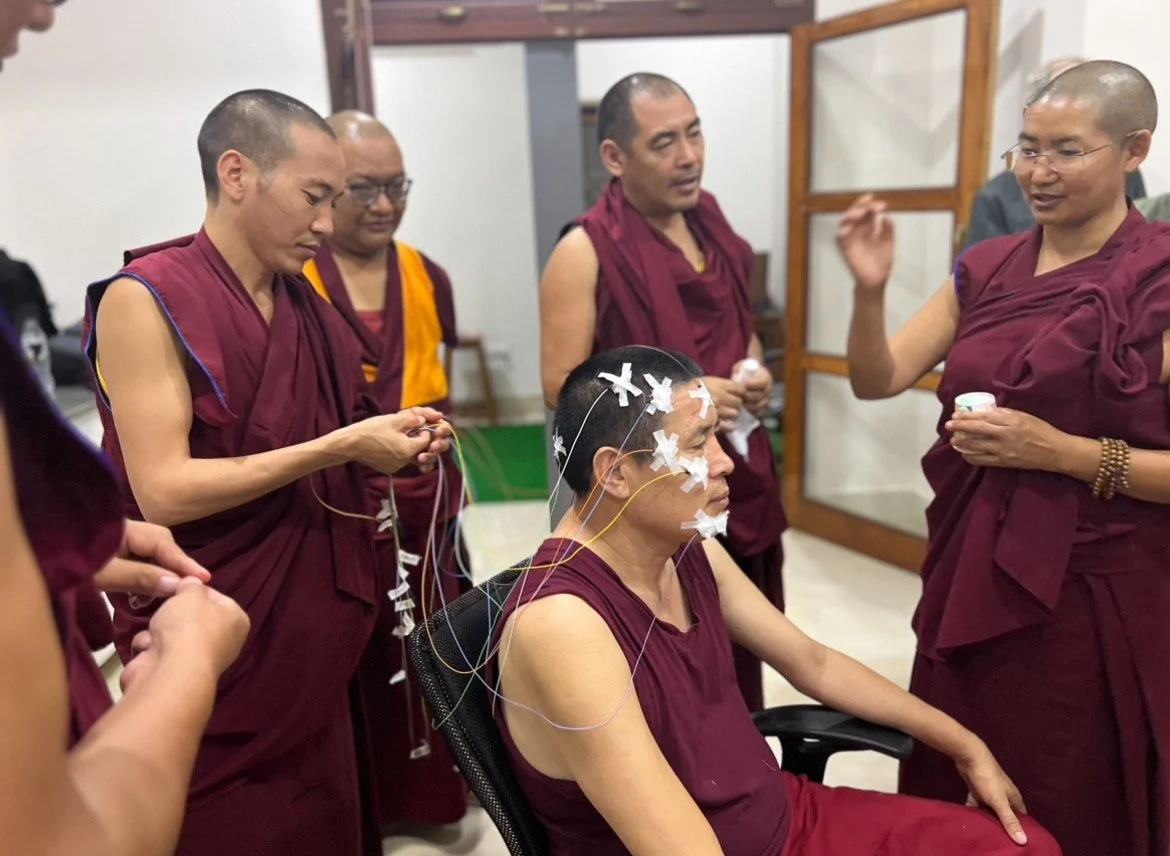
Frontiers of the Mind: The 100-Year Project will chronicle this extraordinary journey — not only from the perspective of luminaries and thought leaders, but through the eyes of the next generation of monastic scholars who are bringing this vision to life. We follow young Tibetan Buddhist monks and nuns as they enter neuroscience laboratories, ask original research questions, and collaborate with scientists to explore whether contemplative practice and empirical science can truly converge.
Our intention is to raise global awareness of this groundbreaking work, to illuminate the voices and contributions of those carrying it forward, and to explore the profound potential at the intersection of these two great traditions for creating a healthier, happier future for humanity.
In sharing this story widely, we aim to deepen support for the 100-Year Project and for the monasteries, nunneries, and communities making it possible.
Why make this documentary?
(the intention of our film)
For nearly four decades, the 14th Dalai Lama has remained committed to his vision of a meaningful dialogue between ancient Tibetan Buddhist wisdom and modern Western science. What began in 1987 as the first Mind & Life Dialogue has evolved into a living laboratory where two great traditions meet to investigate the mind, reality, and the possibility of human flourishing — advancing what the Dalai Lama describes as “the 100-Year Project.
Frontiers of the Mind: The 100-Year Project will chronicle this extraordinary journey — not only from the perspective of luminaries and thought leaders, but through the eyes of the next generation of monastic scholars who are bringing this vision to life. We follow young Tibetan Buddhist monks and nuns as they enter neuroscience laboratories, ask original research questions, and collaborate with scientists to explore whether contemplative practice and empirical science can truly converge.
Our intention is to raise global awareness of this groundbreaking work, to illuminate the voices and contributions of those carrying it forward, and to explore the profound potential at the intersection of these two great traditions for creating a healthier, happier future for humanity. In sharing this story widely, we aim to deepen support for the 100-Year Project and for the monasteries, nunneries, and communities making it possible.
Frontiers of the Mind: The 100-Year Project will chronicle this extraordinary journey — not only from the perspective of luminaries and thought leaders, but through the eyes of the next generation of monastic scholars who are bringing this vision to life. We follow young Tibetan Buddhist monks and nuns as they enter neuroscience laboratories, ask original research questions, and collaborate with scientists to explore whether contemplative practice and empirical science can truly converge.
Our intention is to raise global awareness of this groundbreaking work, to illuminate the voices and contributions of those carrying it forward, and to explore the profound potential at the intersection of these two great traditions for creating a healthier, happier future for humanity.
In sharing this story widely, we aim to deepen support for the 100-Year Project and for the monasteries, nunneries, and communities making it possible.
of monastic scholars who are bringing this vision to life. We follow young Tibetan Buddhist monks and nuns as they enter neuroscience laboratories, ask original research questions, and collaborate with scientists to explore whether contemplative practice and empirical science can truly converge.
Our intention is to raise global awareness of this groundbreaking work, to illuminate the voices and contributions of those carrying it forward, and to explore the profound potential at the intersection of these two great traditions for creating a healthier, happier future for humanity.
In sharing this story widely, we aim to deepen support for the 100-Year Project and for the monasteries, nunneries, and communities making it possible.
Why Us?
(who are we)
We are a small, dedicated production company with unprecedented access to this unfolding story. Over the past four years, our documentary team has worked closely alongside the monastic and scientific subjects at the heart of this narrative, earning their trust and capturing moments that few outsiders ever witness.
Our work is rooted in partnership with the Emory-Tibet Science Initiative (ETSI), launched in 1998 by Geshe Lobsang Tenzin Negi and Emory University as the formal realization of the Dalai Lama's vision. Through this partnership, we have gained intimate access to a cohort of young Tibetan monastic scholars as they navigate laboratories in the United States and beyond — conducting genuine research, asking their own questions, and reshaping what it means to bridge contemplative and scientific inquiry.
We are filmmakers committed to visibility and amplification. We recognize that while the Dalai Lama's vision is globally recognized, the ongoing mission and the remarkable individuals advancing it remain largely unseen. We are here to tell that story with nuance, rigor, and deep respect for both the Buddhist and scientific traditions it brings together.
Why Us?
(who are we)
We are a small, dedicated production company with unprecedented access to this unfolding story. Over the past four years, our documentary team has worked closely alongside the monastic and scientific subjects at the heart of this narrative, earning their trust and capturing moments that few outsiders ever witness.
Our work is rooted in partnership with the Emory-Tibet Science Initiative (ETSI), launched in 1998 by Geshe Lobsang Tenzin Negi and Emory University as the formal realization of the Dalai Lama's vision. Through this partnership, we have gained intimate accessto a cohort of young Tibetan monastic scholars as they navigate laboratories in the United States and beyond — conducting genuine research, asking their own questions, and reshaping what it means to bridge contemplative and scientific inquiry.
We are filmmakers committed to visibility and amplification. We recognize that while the Dalai Lama's vision is globally recognized, the ongoing mission and the remarkable individuals advancing it remain largely unseen. We are here to tell that story with nuance, rigor, and deep respect for both the Buddhist and scientific traditions it brings together.
realization of the Dalai Lama's vision. Through this partnership, we have gained intimate access to a cohort of young Tibetan monastic scholars as they navigate laboratories in the United States and beyond — conducting genuine research, asking their own questions, and reshaping what it means to bridge contemplative and scientific inquiry. We are filmmakers committed to visibility and amplification. We recognize that while the Dalai Lama's vision is globally recognized, the ongoing mission and the remarkable individuals advancing it remain largely unseen. We are here to tell that story with nuance, rigor, and deep respect for both the Buddhist and scientific traditions it brings together.
Why Now?
(the urgency and importance)
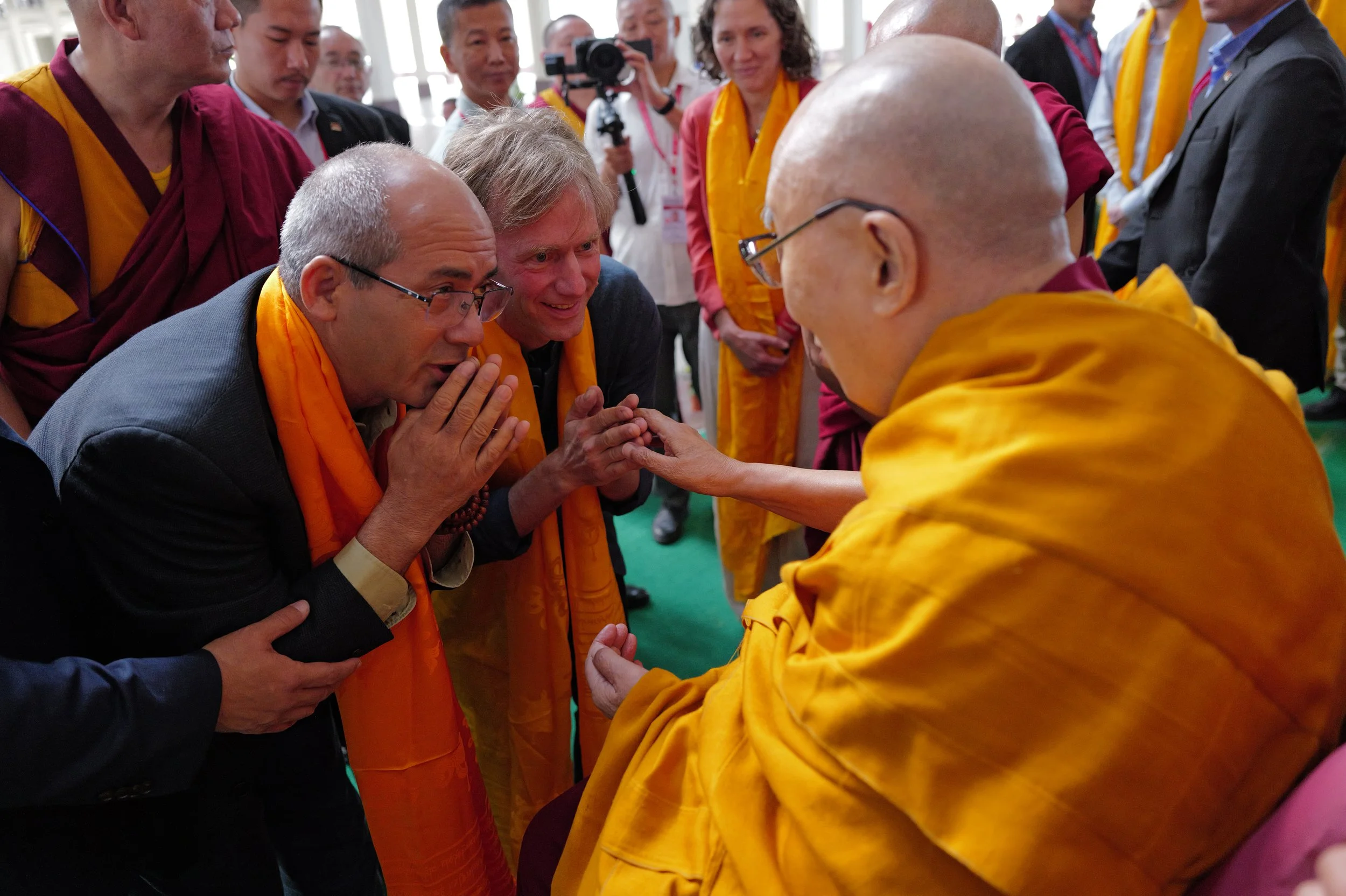
The time to tell this story is now. The Dalai Lama is 91 years old, and the future of his historic initiative — and indeed the future of Tibetan culture, identity, and self-determination — hangs in the balance. The voices and achievements of those advancing his vision must be documented and amplified now, while this pivotal generation of monastic scholars is actively engaged in pioneering work.
The world faces urgent challenges: mental health crises, fractured communities, and a widespread hunger for wisdom that transcends narrow disciplinary boundaries. The collaboration captured in our film offers something rare — evidence that ancient contemplative traditions and modern science are not adversaries, but partners in understanding consciousness, compassion, and human potential.
Additionally, there is a critical visibility gap. Misconceptions persist about both scientists and Buddhist monastics. The extraordinary work of monastic scholars — their rigorous training, their original contributions to neuroscience, their commitment to both tradition and innovation — remains invisible to the public. By bringing these stories to light, we can shift the conversation, build broader support for the 100-Year Project, and demonstrate that the future of human well-being depends on exactly this kind of courageous, humble exchange.
The world faces urgent challenges: mental health crises, fractured communities, and a widespread hunger for wisdom that transcends narrow disciplinary boundaries. The collaboration captured in our film offers something rare — evidence that ancient contemplative traditions and modern science are not adversaries, but partners in understanding consciousness, compassion, and human potential. Additionally, there is a critical visibility gap. Misconceptions persist about both scientists and Buddhist monastics. The extraordinary work of monastic scholars — their rigorous training, their original contributions to neuroscience, their commitment to both tradition and innovation — remains invisible to the public. By bringing these stories to light, we can shift the conversation, build broader support for the 100-Year Project, and demonstrate that the future of human well-being depends on exactly this kind of courageous, humble exchange.
All proceeds from the film will support the Emory-Tibet Science Initiative (ETSI) and the monasteries and nunneries of our collaborators who, together, have made this 100-Year Project possible.